
When one thinks of a trademark, one generally thinks of a word trademark such as ESPRIT or a design trademark such as Dairy Queen’s “DQ & Design”:
Many companies, however, have recognized the importance of what may be classified as “non-traditional” trademarks: colour, sound and scent. It is unquestionable that a sound, colour, or scent can form an association with a certain company in the mind of the consumer. For example, an individual singing along to a catchy ZOOM ZOOM ZOOM tune may find themselves thinking about Mazda’s automobiles. The registrability of non-traditional trademarks is an interesting and often-debated topic.
Sound trademarks. The Trademarks Office generally objects to the registration of sound trademarks on the basis that sound cannot be physically represented. Commentators (and applicants) have argued, however, that sound marks can be represented visually in a number of ways. For example, Metro-Goldwyn-Mayer Lion Corp. has applied to register its roaring lion sound, often heard at the beginning of movies. The roaring sound is represented as follows in the application: 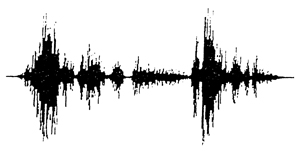
Another application, for HI SA MI TSU & DESIGN (for use in association with medical goods) is represented visually as: 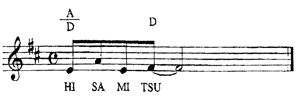
and is described in the application as follows:
“The mark consists of the word “HISAMITSU” sung over the sound of four musical tones, E, A, E, and F sharp. The first three notes being quarter notes and the final note being a tied quarter note and half note.”
Neither mark has been approved by an Examiner.
A famous example of a sound trademark in the United States is Harley-Davidson’s attempt to register a particular exhaust sound in association with its motorcycles. Harley-Davidson’s application was eventually abandoned after nine competing motorcycle manufacturers opposed the trademark.
Colour trademarks. Although colour can form part of a trademark in Canada, the Trademarks Office will not accept an application for the registration of a colour unless the colour is tied to a particular size or shape.
The ban on colour-alone marks has required applicants to file somewhat imaginative applications in an attempt to avoid an objection by the Trademarks Office. For example, a company called Henkel Canada Corporation sells masking tape for use in painting.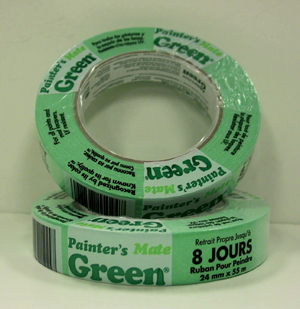
Henkel's COLOUR GREEN #2 trademark is shown below: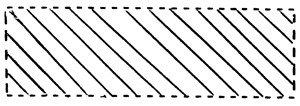
The trademark application claims that “[t]he trademark consists of the colour green applied to the whole of the visible surface of the particular piece of masking tape depicted in the drawing.” Although Henkel’s trademark is limited to a particular shape, the shape is common for masking tape and therefore a registration would essentially grant Henkel the sole right to sell green masking tape. A third party is opposing Henkel’s application.
Scent trademarks. There appears to be little interest in protecting scent trademarks in Canada, despite the existence of research suggesting that scent is the strongest sense tied to memory.
There are no Canadian cases dealing with the registrability of scent trademarks, nor are there any registrations or pending applications for scent trademarks on the Trademarks Database. Many speculate that the Trademarks Office would refuse to register a scent trademark on the basis that, similar to sound trademarks, scent cannot be visually represented. However, a written description of a scent, or a scientific chart such as a chromatogram, are arguably both physical representations of scents.
The future of non-traditional trademarks. Although the current position of the Trademarks Office is that colour alone, sound, and scent trademarks are not registrable, a modernization of trademark law in Canada may eventually result in protection for non-traditional trademarks. As indicated by the Canadian Intellectual Property Office in a call to the profession in 2005, “many feel that these so called non-traditional marks are the dominant branding strategies of the future. We are at a critical juncture in the way trademarks are selected, created and used and the time for change is approaching rapidly.”
Heather E. Roberston, Toronto